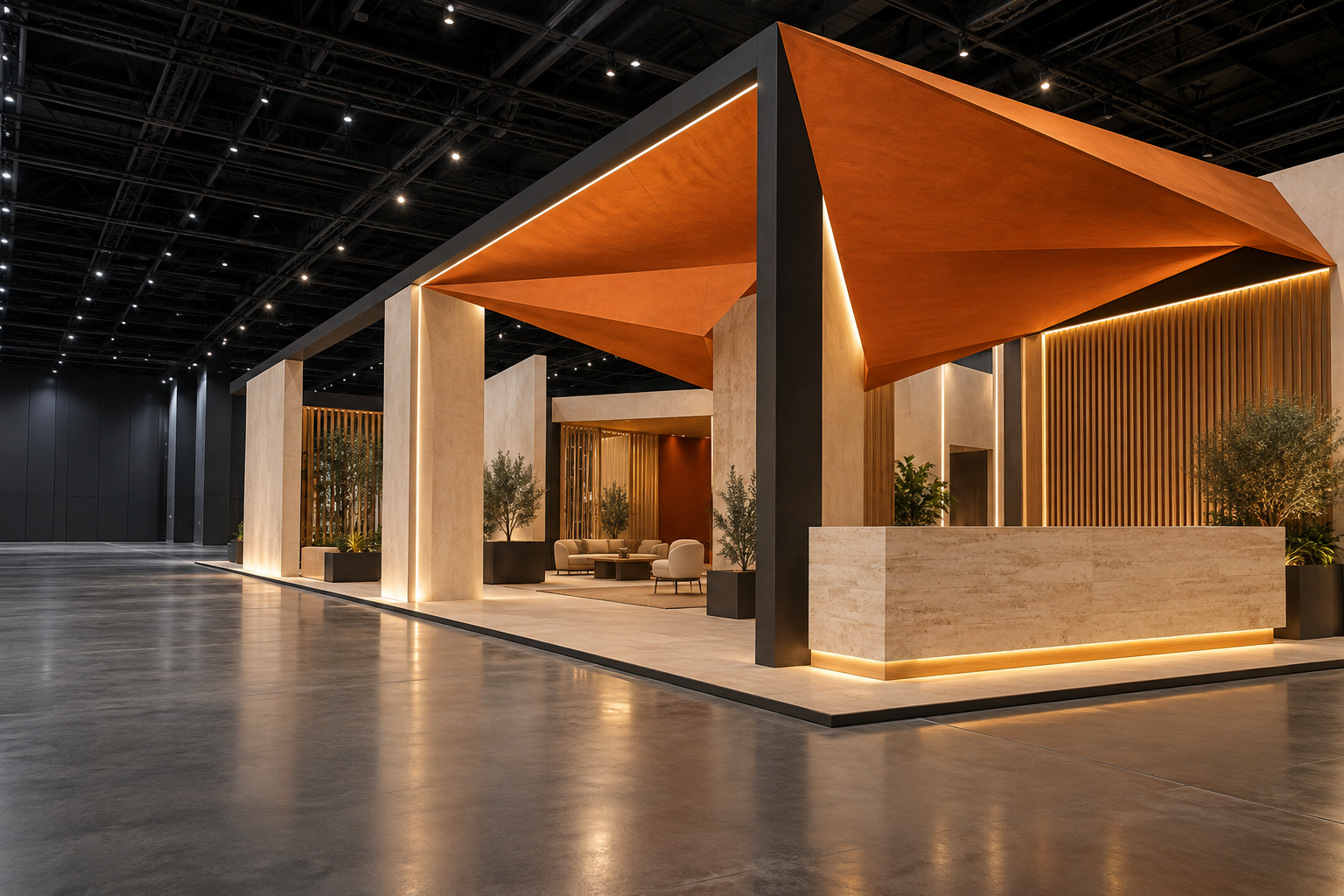
A stand project is not just about an appealing image. The design must translate a specific use: attracting visitors from the aisle, guiding them, presenting an offering, organizing a demonstration or creating a space for discussion. The 3D stand design is used to test this logic before fabrication. It makes proportions, access points, circulation areas and message hierarchy visible. It also makes it possible to anticipate the elements that influence how the stand is perceived: height, volumes, lighting planned for the project, graphic surfaces and proposed furniture. This stage creates a concrete basis for discussion between the marketing, communications and procurement teams and the trade show stakeholders.
Preparation must then incorporate the constraints involved in deployment. The allocated floor space, exhibition regulations, access times, delivery conditions, electrical requirements communicated by the organizer and setup schedule may all affect the design choices. An exhibition stand in Morocco must therefore be designed with its installation context in mind, without separating aesthetics from feasibility. Brand files, content, product visuals and technical information should be gathered early enough to limit revisions and clarify approvals. The brief can also specify the number of people to host, storage requirements, the confidentiality of a meeting or the presence of an activity.
Finally, fabrication is only one part of the experience. Branding, fit-out, transportation, setup and dismantling all contribute to the quality of the final result. For a custom stand fabrication project, decision criteria should therefore include graphic consistency, readability from a distance, the actual use of the spaces, operational coordination and the ability to adhere to the approved choices. Our role is to support these stages according to the brief, maintaining a clear thread from the initial modeling to the stand's presence on site.